
Emergency Tree Service in Weymouth, MA
On the roof, across the drive, or sitting at an angle it was not sitting at in November. People and exits first, the rest of the danger second, tidiness a long way third.
A Hazard Needs Something To Fall On
Three things have to line up before the word means anything: a defect that can fail, something making it worse, and a target underneath worth protecting.
Failure potential
Cracks, decay pockets, a root plate that has turned, or a union with bark trapped in it. These are the defects that actually predict a failure rather than merely look untidy.
Something driving it
Saturated ground, a nor'easter, or a neighbouring tree that used to shelter it and has gone. Trees that stood for decades fail in the year their conditions change.
A target beneath
A house, a car, a drive, people. Without one there is no hazard in the technical sense however alarming the tree looks from the kitchen window.
Lines change the order
A conductor in the picture makes this the utility company call before it is ours. Flag it on the phone and stay clear until they have attended.
What happens After The Call
Storm week runs on triage rather than on the order the phone rang, and it is fairer to say so than to pretend otherwise.
Call
What is resting on what, whether anybody is hurt, and whether a line is involved. Those three answers set the order.
Triage
Trees on structures, trees blocking an exit and anything tangled in a line get seen before anything merely untidy.
Quote
Ordinary rates, written down, in a form an adjuster can read without ringing us about it.
Make safe
Load off the structure, access opened, then the remaining hazard dealt with properly rather than quickly.
Six things worth checking after a Weymouth nor'easter
The useful survey after a blow is done slowly, from the ground, looking up. These six account for most of the calls that come a fortnight later, once the next wind has found what the first one loosened.
Soil heaved at the base
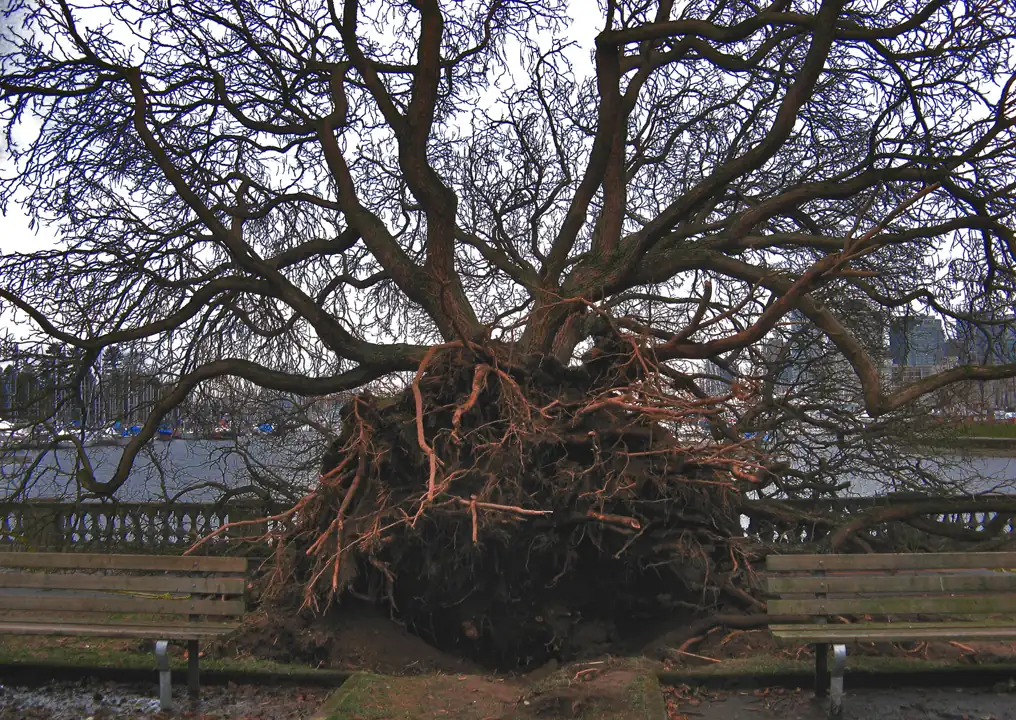
A ridge of lifted turf on the side opposite the lean means the root plate turned in this storm. That one does not wait.
A limb caught aloft
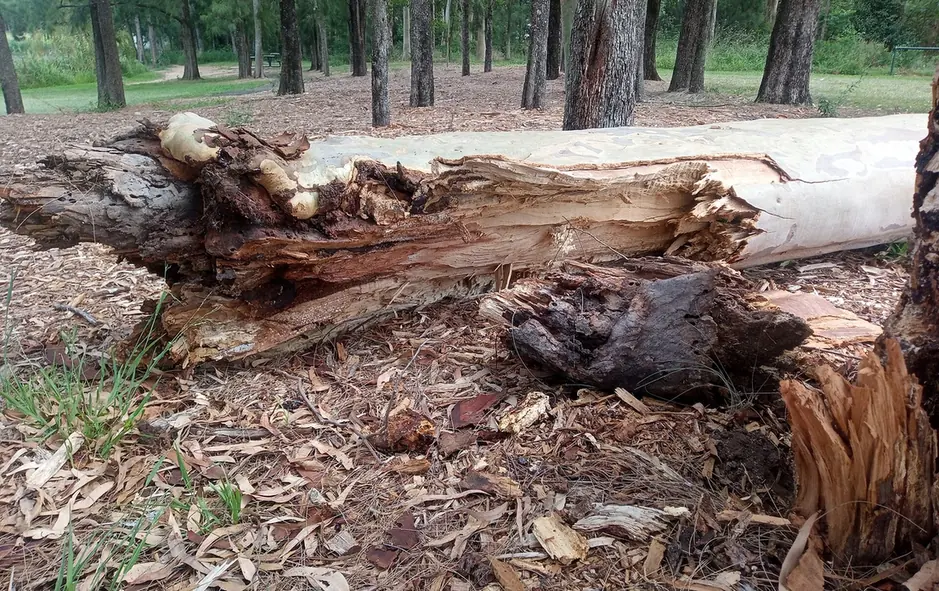
Broken but lodged in the canopy, it comes down on its own timetable. Move the cars and keep people from under it.
A fresh split at a fork
New vertical splitting where two stems meet means the union has begun to open. They do not close again.
The tree has moved
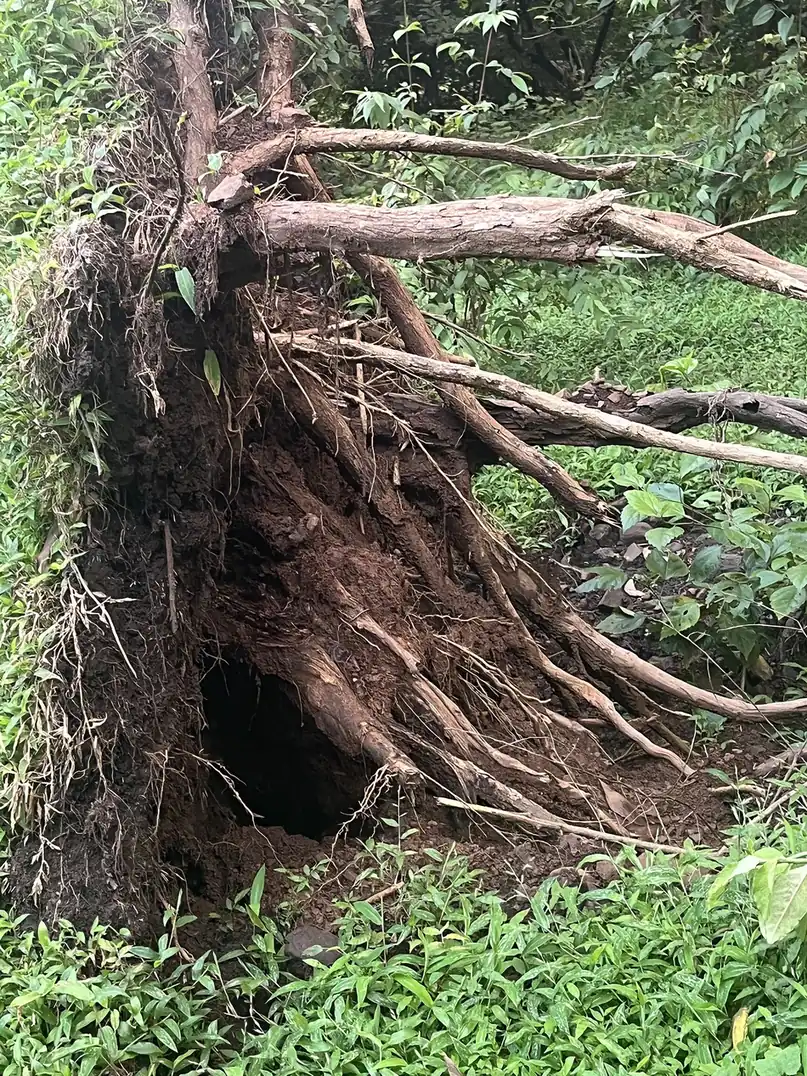
If it stands at a different angle than it did in autumn, something below ground changed. The angle is only the symptom.
Bark shed in plates
Large flakes on the ground under a tree usually mean the wood underneath has already dried out and gone brittle.
Deadwood over the drive
Storm-loosened limbs above where the cars sit are the cheapest thing to deal with now and the dearest to leave.
What We check before quoting a storm job
| Checked on site | Why it matters |
|---|---|
| Root plate and soil | A turned plate is a failure in progress, not a lean |
| Load path on the structure | Decides the order the pieces can safely come off |
| Proximity to conductors | Changes who does the work and in what sequence |
| Remaining sound wood | Decides whether it can be climbed at all |
| Access for a crane | Often the difference between one day and three |
| Whose tree it is | A public shade tree is the tree warden's call, not yours |
What a nor'easter finds in a Weymouth garden
Whatever was already weak, and a coastline gives it plenty of chances. The South Shore takes onshore wind through a long winter, and Weymouth sits close enough to feel it properly. Sixty-year oak and maple with long limbs reaching toward the house are the shape that fails in that wind, and the ground is often saturated by the time it arrives, which is the combination that turns a root plate rather than snapping a limb. The calls cluster on the same streets each time, because those streets were built in the same year and planted in the same year too, so the whole run of them arrives at the same condition together.
- ✓ Structures and exits first
- ✓ Same rates in storm week
- ✓ Written scope for an adjuster
- ✓ Lines flagged to the utility
- ✓ Leaning trees read properly
- ✓ After-hours response
Six Jobs a Weymouth lot tends to need
Takedowns, crane work, pruning, stumps, storm callouts and the clean-up that follows a nor'easter.
Tree Removal
Dropped whole where the space exists, otherwise taken apart from the top on ropes.
Learn more →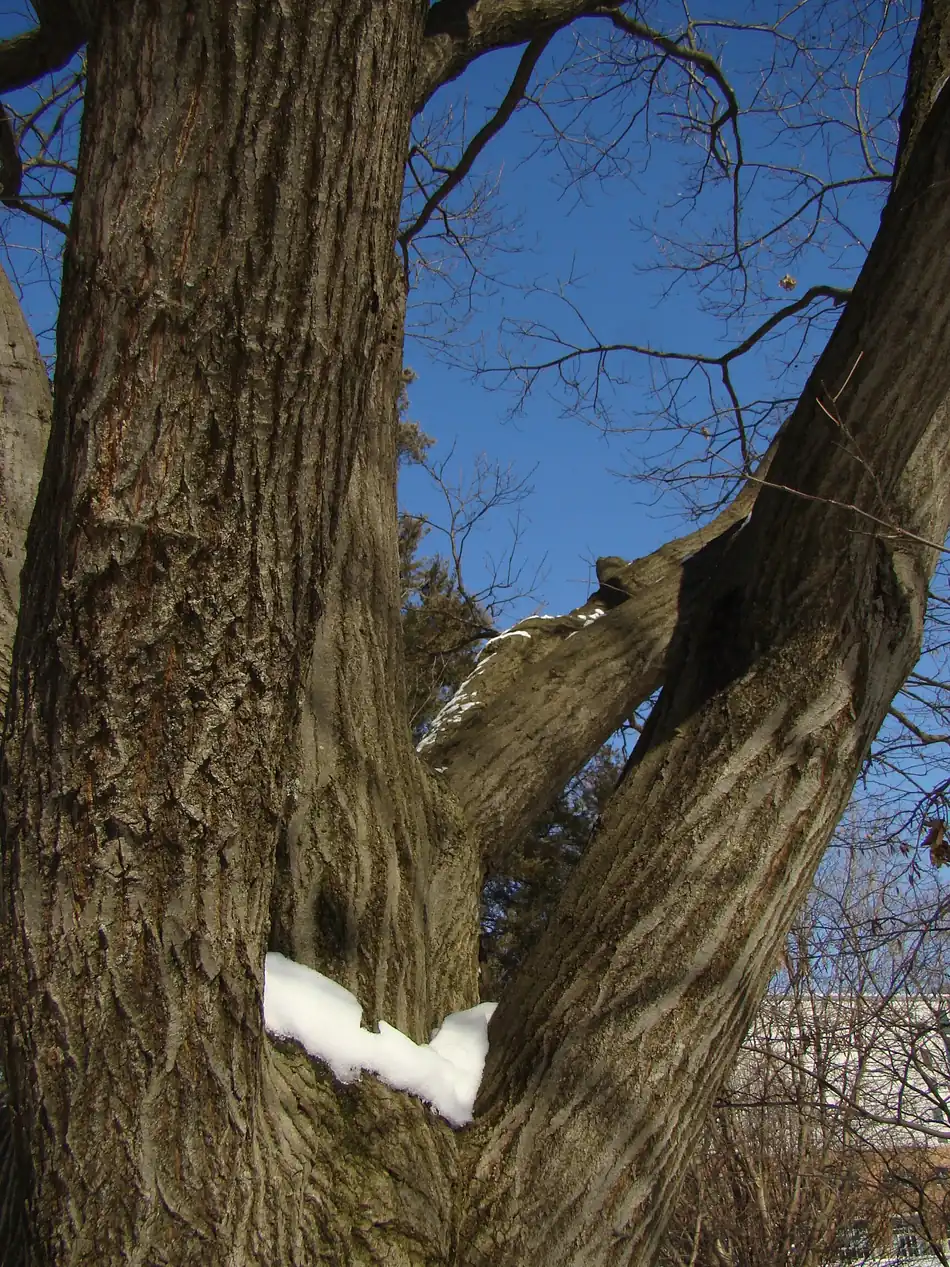
Tree Trimming
Thinning, raising, reduction and deadwood, every cut set outside the branch collar.
Learn more →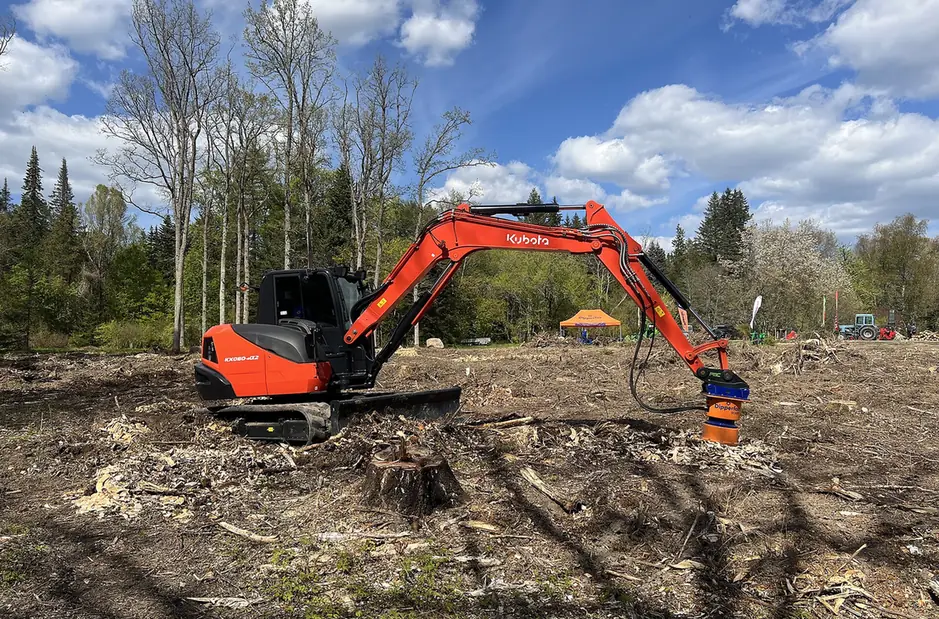
Stump Grinding
Ground out under the surface until the spot will take grass, a bed or a post again.
Learn more →Emergency Tree Service
Anything on a roof, across a drive or leaning since the storm, seen ahead of the queue.
Learn more →
Crane-Assisted Removal
A crane lifts the sections out over the house when there is nowhere to lower them.
Learn more →Storm Damage Cleanup
The clean-up after the wind: cut, chipped, loaded and carried off the property.
Learn more →Where We Work on the South Shore
The South Shore ring around Weymouth: Braintree and Quincy north, Hingham and Cohasset along the coast, Randolph, Holbrook and Abington inland, and out through Rockland, Norwell and Marshfield when the job warrants the run. One rate sheet, no mileage line on the invoice.
Emergency questions answered
Move everybody clear of it and pick up the phone. Where a wire is involved, assume it is live, keep your distance and let the utility know before anyone else. The roof is not the place to assess it from.
No. The figure comes off the same rate sheet used in a quiet February, goes on paper before the work starts, and is written so an insurer can read it.
Get it in writing before anything is cut, and ask what happens to the debris. Massachusetts has no arborist licence to check, so the paperwork and the insurance certificate are what you actually have to go on.
Leaning on its own proves very little. What we read is the ground: undisturbed turf around the base and no new crack usually means it has been sitting like that for years. Heaved soil opposite the lean means it moved this week.
Your insurer decides that, and what the tree landed on matters far more to them than what made it fall. What we hand you is a written scope and figure set out so an adjuster can read it without a follow-up call.
Then the town is involved, because a public shade tree is the tree warden's responsibility rather than yours. Report it and we will tell you plainly where our part of it starts.
Whatever is already in front of you decides it, and houses and blocked exits sit at the top of that list. What you will get is an honest window, which in storm week is worth more than an optimistic one.
That is occasionally the worst cut on the whole job. Weight resting on a roof has to go somewhere when you release it, so the sequence is the work and the sequence is what you are paying somebody to know.
Not sure whether that street tree is even yours to cut?
Somebody real answers, the visit is not charged for, and where the week allows we get out to look within a few days. Ring, or send the details and we will come and put a tape on it.